
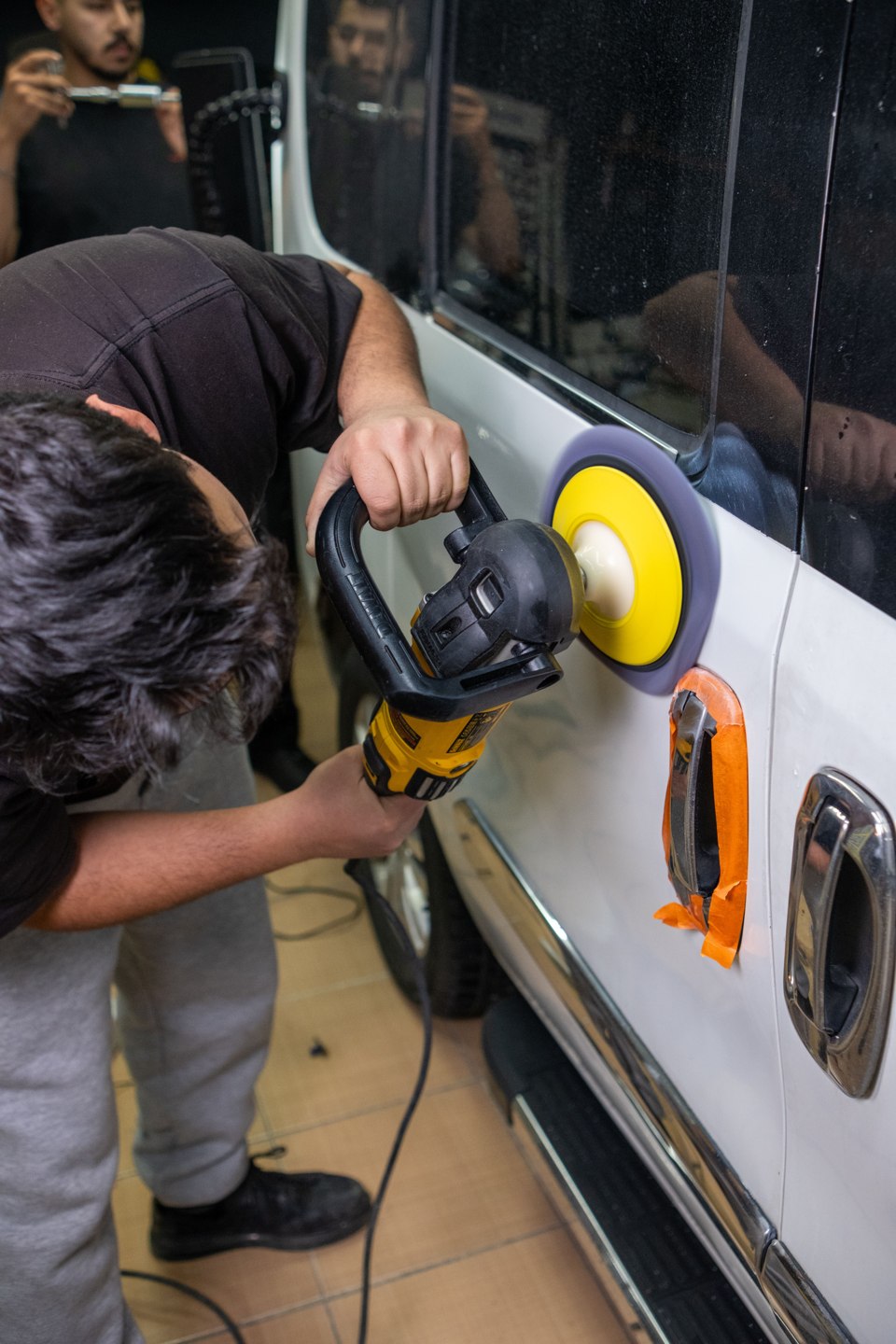
A clean car can look worse the first time you see it in direct sun. The grey film has lifted, so the light makes fine marks around its reflection more obvious. Those arcs can be the result of previous washing, drying or polishing. A new wash can also add marks if dirt catches in a mitt or towel.
Look under more than one light
Inspect a clean, dry panel in open shade, then move a small inspection light or change your angle to the sun. Fine marring tends to become obvious around a strong light source. Long parallel scratches, patchy haze and marks that follow a panel edge tell a different story. Photograph the panel with the light just beside the worst area so the camera can pick up the details.
A workshop inspection checks the finish before selecting a pad and polish. A light pass may make a noticeable difference on one car while another needs more refinement. On a panel with damaged clear coat or a deeper scratch, chasing a perfect reflection may take more material than the finish can spare.
Keep corrected paint looking consistent
Clear the loose grit before contact, use separate wheel tools and stop using a mitt or towel that has hit the ground. Dry with a clean towel and avoid wiping a dusty car between washes. It is worth getting the wash routine right before paying for paint correction, because new marring will show on the freshly polished finish.
If you see marks only in certain lighting, bring a photo or point them out at the workshop.