
When a detailer places a thickness gauge on a bonnet, the reading helps build a picture of the paint across that panel. It is one part of the assessment alongside the condition of the finish, the panel material and any known repair history.
Read the pattern across the panel
Many common gauges for steel or aluminium report the combined thickness of the coating system above the metal. That can include primer, colour and clear coat. It does not isolate the amount of clear available to polish. A different measurement method may be needed on a plastic bumper or composite panel.
Several readings across comparable areas are more useful than one number at the centre of a panel. A relatively thick area can be consistent with previous refinishing, but readings alone cannot prove when or why it was repaired. Different panels can also differ from the factory. Instrument suitability, placement and substrate matter.
A real VIKMO assessment
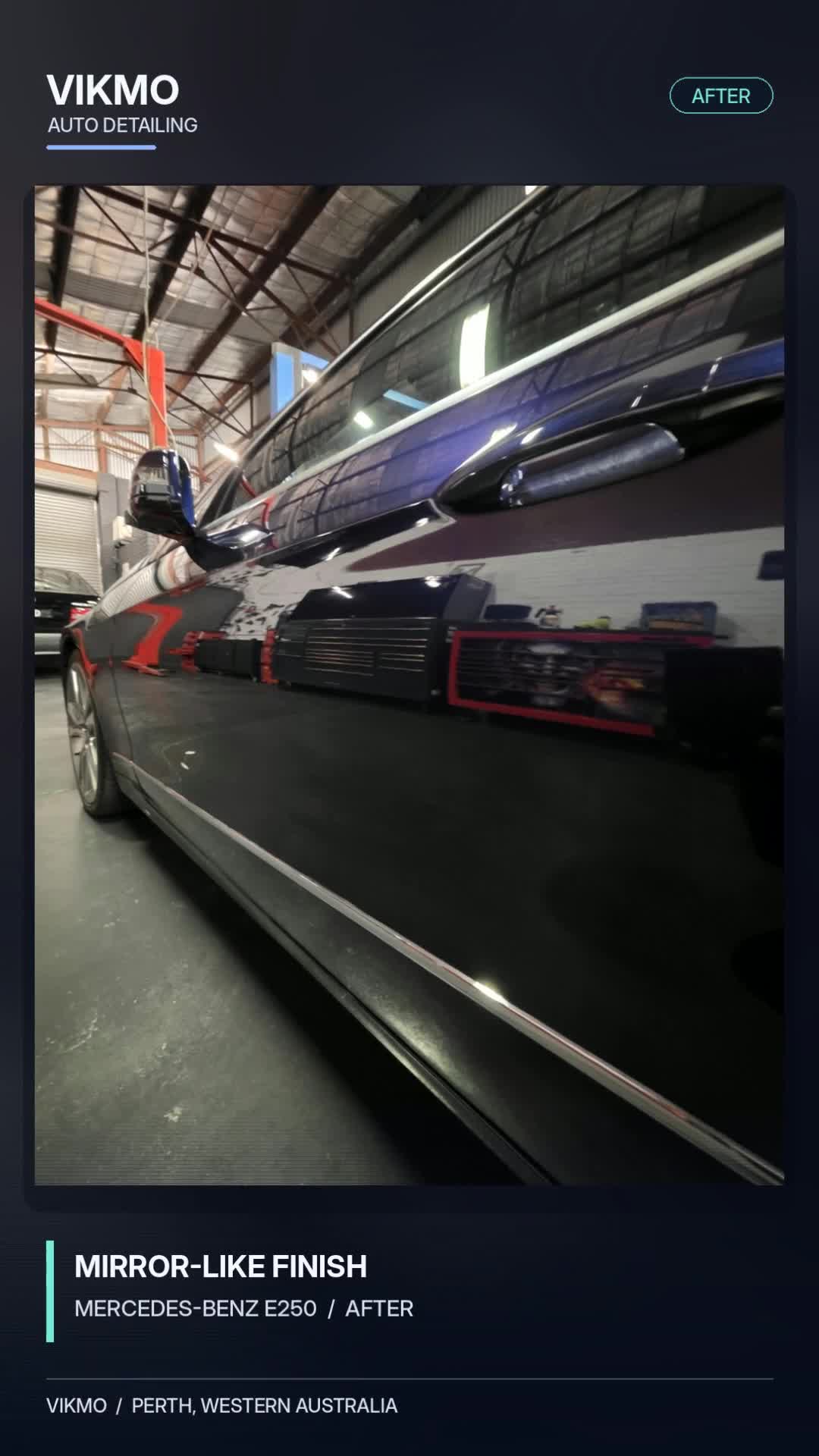
Our Mercedes E250 record shows front-door numeric ranges of 140–361 μm and 206–585 μm, with two additional out-of-range points on each door. These combined-layer readings do not measure clear coat alone or establish a safe polishing allowance.
See the actual front-door assessment samples and their limits from this Hamilton Hill workshop case.
Use the readings to decide how far to go
An unusually low or inconsistent reading is a reason to look closer and choose a conservative approach. Edges and raised lines deserve extra care. So does any area with signs of paint failure, even if a reading elsewhere on the panel appears normal. There is no universal number that guarantees a particular polish is safe.
Tell us about any repaint or previous correction before work starts. We can combine the available measurements with inspection lighting and a test area to explain what can improve, where to limit the work and when a repairer is the better option.