
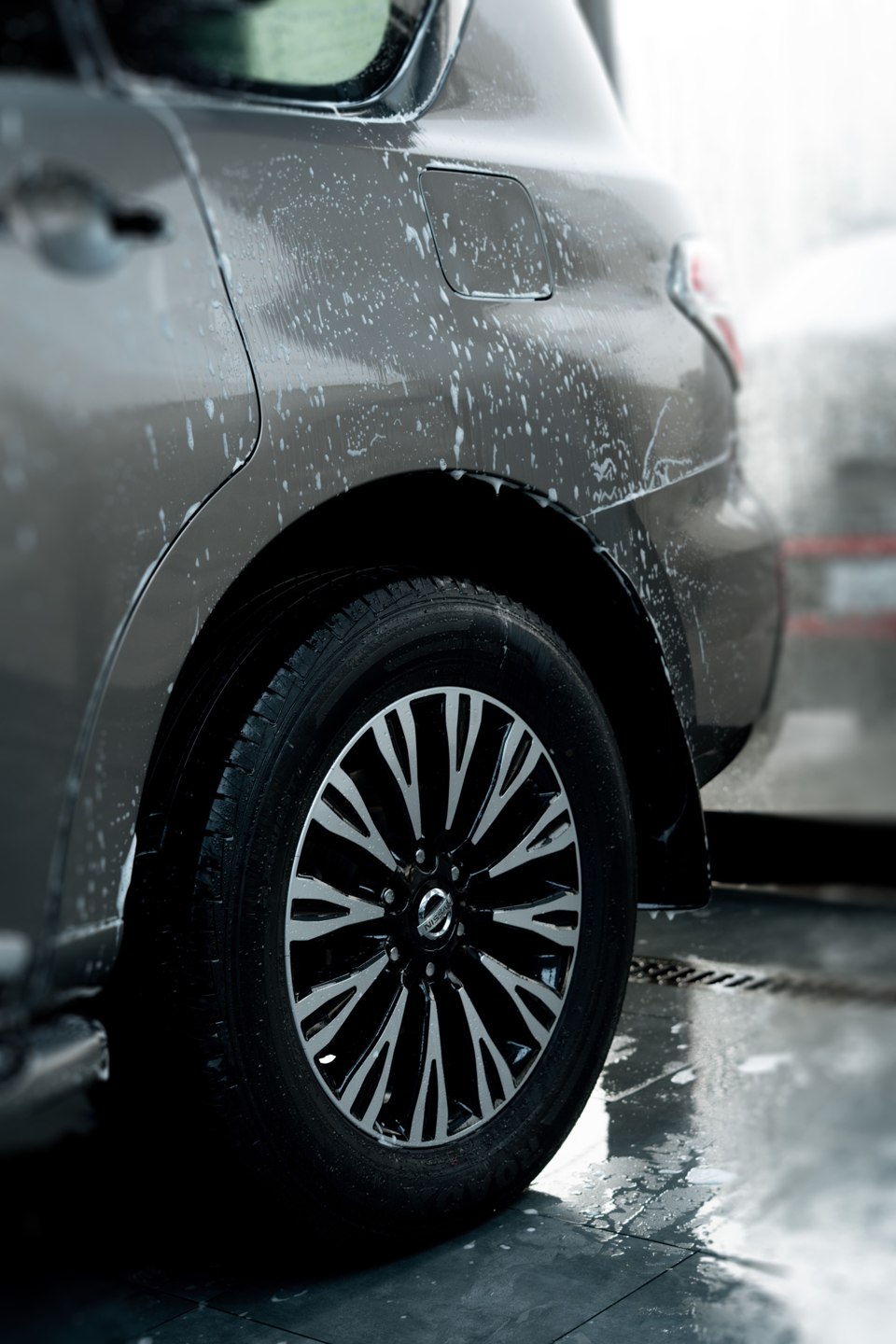
Brake dust collects inside spokes, around wheel bolts and in the barrel. A quick rinse removes loose material, but some residue sticks. Before reaching for a strong cleaner, check what finish you are working on. Painted and clear-coated wheels, polished aluminium, matte finishes and damaged coatings can require different care.
Start on a cool wheel
Let the car cool after driving. Rinse off loose particles and choose a cleaner suitable for the manufacturer’s wheel finish. Read the label for dwell time and rinsing. Work on one wheel at a time so the product can be rinsed before it dries, especially on a warm Perth day.
Use soft, dedicated brushes. A small brush does a better job around a lug recess than pushing a large brush into the opening. Keep the wheel tools separate from your paint wash kit. Rinse the face and accessible barrel thoroughly, then check for residue once the wheel dries. Any process around brakes should follow the vehicle maker’s instructions.
Know when a mark is in the finish
Brown specks may respond to an appropriate fallout remover. A mark that stays in the same shape after washing may be corrosion, a chip or damage to the finish. Stronger chemicals or hard scrubbing can make that area worse. Take a close photo and have it assessed before escalating.
For a car that makes heavy brake dust, a regular wash with a suitable product is easier than waiting for staining. Tell us if the wheels are aftermarket, recently refinished or already coated when you ask for a detail.
If brake dust builds up quickly, our guide to coating wheels and exterior trim explains which wheel surfaces to ask about and what to check before you book.