
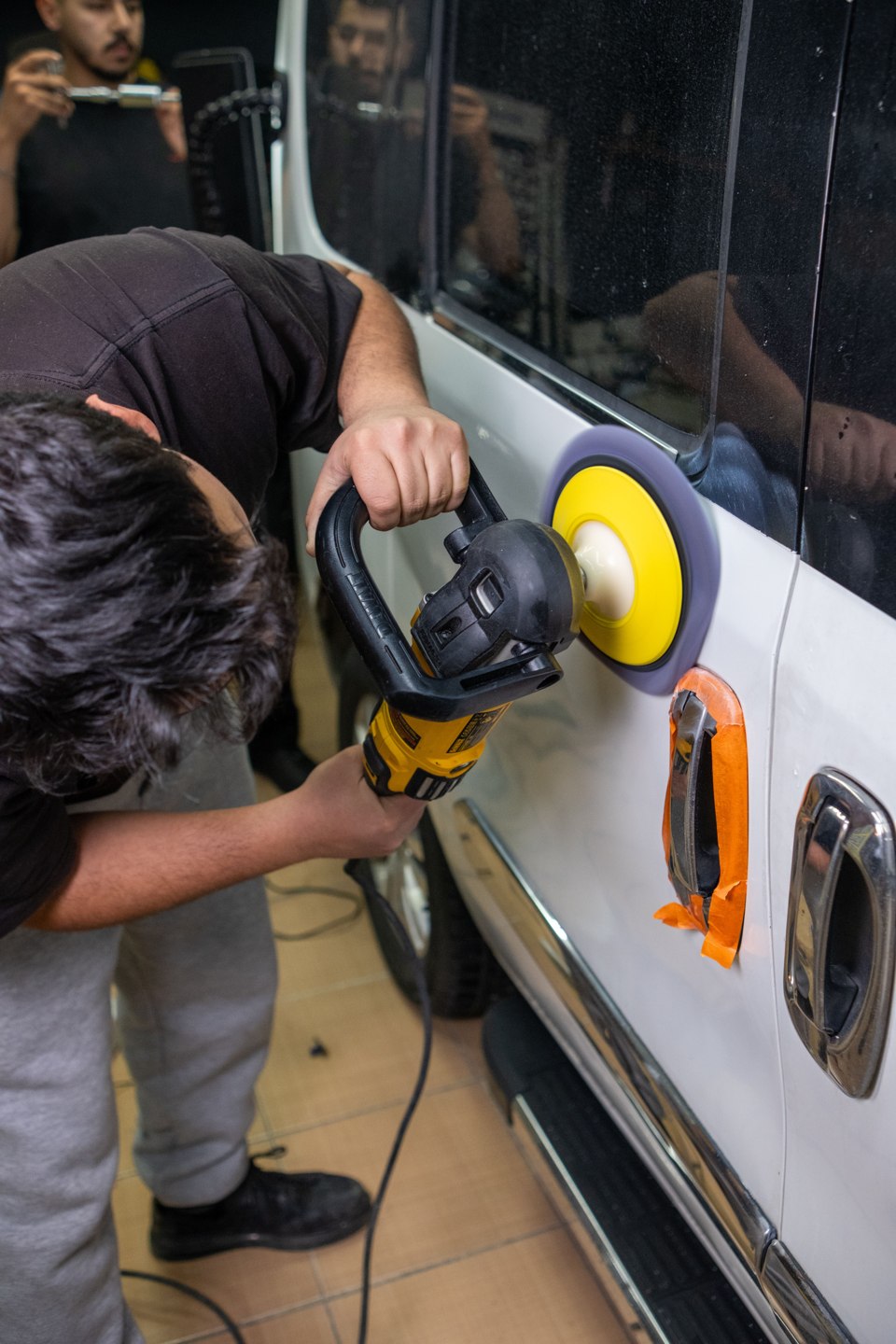
A scratch on a door can look severe under one light and disappear from across the car park. Its length and brightness are useful clues, but what matters for correction is where the damage sits in the paint system and how much surrounding material can safely be polished.
Check the area once it’s clean
First wash the area gently. What looks like a scratch sometimes includes material transferred from another object. That transfer may improve after careful cleaning. If the mark has a contrasting edge, a chip, exposed colour underneath or visible primer, it needs a different assessment from a fine surface mark.
A nail catching a clean scratch can be a clue that it is more pronounced. It cannot tell you how much clear coat is left. Sharp body lines, edges and previously polished or repainted panels also require care. Polishing removes some surface material, so the safer outcome can be a mark that looks softer and draws less attention.
Choose the repair to match the result you want
Paint correction may improve the surrounding finish and reduce the appearance of shallow scratches. Where paint is missing, a repairer can advise on touch-up or refinishing. A dent or damaged panel might need separate attention. On a car you use daily, improving the finish around an isolated mark may be the right choice. For a defect in your direct line of sight every day, getting a repair quote first may save work later.
Photos are optional. If you have them, a whole-panel photo and a close-up in good light help us see the mark. We can discuss how it happened and any previous repairs when we respond.